
A brand pays a creator for one video. The creator posts it on TikTok, then Instagram, then Facebook. A week later the report comes in. One platform did well. The other two barely moved.
The usual conclusion is that the creator’s audience only lives on one platform, or that the other two “don’t work for us”. Sometimes that’s true. More often, the video was fine and the approach was wrong.
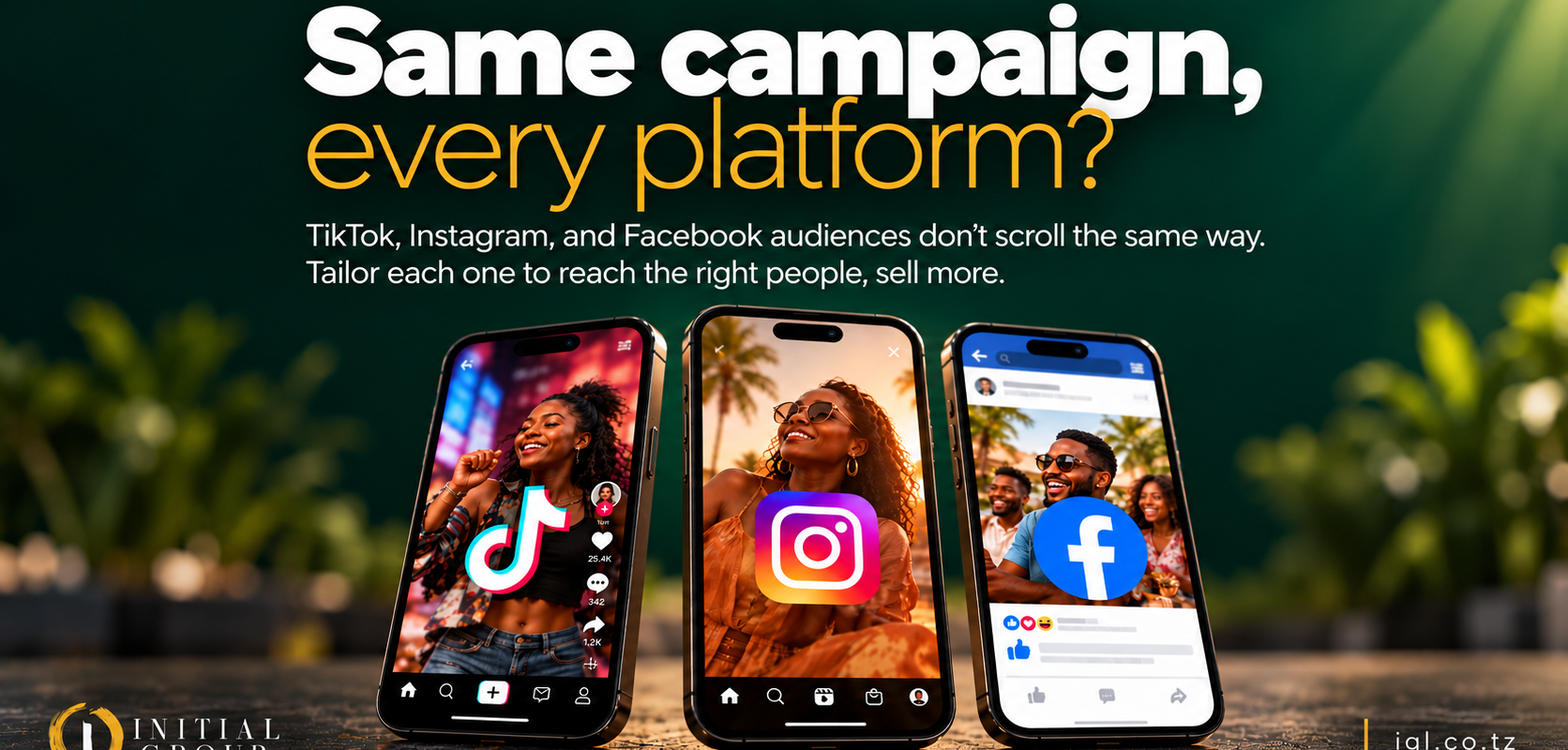
TikTok, Instagram and Facebook look alike on the surface. They all run short vertical video, likes, comments and shares. But people open each app for different reasons, in a different frame of mind. A video built for one of those moments will usually underperform in the other two.
This matters most when budgets are tight. If you’re paying for reach on three platforms and only getting results on one, two-thirds of that spend is working at a fraction of its potential.
Each platform does a different job
The simplest way to think about it: TikTok is where people discover you, Instagram is where they decide whether they like you, and Facebook is where they talk about you.
TikTok: discovery
Most people on TikTok aren’t following your brand and aren’t looking for it. The feed decides what they see, and they decide in a second or two whether to keep watching. That makes TikTok the best place to reach people who have never heard of you.
What works here is content that feels native to the feed. Creators speaking to camera, real reactions, trends and sounds used with a point of view. Anything that looks like an ad gets skipped. The opening line or image has to earn the next five seconds.
Instagram: affinity
People on Instagram tend to follow accounts they’ve chosen, and they care how things look. This is where a brand builds a picture of itself that people want to be part of.
Reels still need a hook, but quality, styling and a consistent visual identity matter more than on TikTok. Instagram is also where people check you out after discovering you somewhere else. Your profile grid, highlights and product tags do quiet but important work.
Facebook: conversation
Facebook audiences often skew older and more local, and the platform rewards content that gets shared and discussed. Groups, comment threads and shares to friends and family are where things spread.
The content that travels here is useful, relatable or worth arguing about. A practical tip, a story people recognise from their own lives, a question that invites opinions. Pure aesthetics rarely carry a post on Facebook the way they can on Instagram.
Do you need three different videos?
Usually, no. The expensive part of influencer content is the idea, the creator’s time and the shoot. Changing a hook, a caption or a crop costs a fraction of that.
The mistake isn’t cross-posting. It’s cross-posting without changing anything. One strong creative idea can perform on all three platforms if each version is adjusted to fit where it’s going.
The practical move is to plan for this before filming. Ask the creator to shoot two or three alternative openings and a few extra cutaway shots. That gives the editor what they need to build a version for each platform, without a second shoot.
How to adapt one video for three platforms
- Rework the first three seconds. The opening decides whether anyone sees the rest. On TikTok, lead with the most surprising moment or a direct line to camera. On Instagram, open on a strong visual. On Facebook, open with something people recognise from their own lives.
- Rewrite the caption and call to action. A short, casual TikTok caption looks out of place on Facebook, where people read more. Match the ask to the platform’s job too: “follow for part two” on TikTok, “save this” or “shop the look” on Instagram, “tag someone who needs this” on Facebook.
- Export clean files. Never upload a video that carries another app’s watermark. Instagram has said publicly that it reduces the reach of Reels with visible watermarks from other apps. It also tells your audience the content is a leftover.
- Check framing and on-screen text. Each app places its buttons, captions and usernames in slightly different spots. Make sure your text and product shots aren’t hidden behind them. Captions burned into the video help everywhere, since many people watch with the sound off.
- Adjust the length and pace. A video that works at 45 seconds on one platform may perform better cut to 20 on another. Trim based on where viewers drop off, not on a fixed rule.
- Use each platform’s own tools. Native sounds on TikTok, product tags and collaboration posts on Instagram, sharing into relevant groups on Facebook. These features exist to help content spread, and the platforms tend to favour posts that use them.
Measure each platform by the job it’s doing
Views are the easiest number to report and the least useful on their own. A video can collect huge views on TikTok and move no product, while a smaller Facebook post drives real enquiries. If every platform is judged on views, you’ll draw the wrong conclusions.
Track each platform separately, against what you asked it to do:
| Platform | Its job | Numbers that matter | A warning sign |
| TikTok | Discovery | Average watch time, completion rate, shares, new followers | High views but people leave in the first 3 seconds |
| Affinity | Saves, profile visits, link clicks, product tag taps | Likes with no saves or profile visits | |
| Conversation | Shares, comment volume and quality, link clicks | Reactions only, no shares or replies |
Where you can, connect all three to sales. Give each platform its own tracked link or discount code. That’s the only reliable way to know which one is paying back the investment, rather than which one looks busiest.
When to pay for platform-specific content
Adapted cross-posting is the right default for most campaigns. But there are times when a separate piece of content for one platform is worth the extra cost:
- One platform carries most of the campaign’s goal. If the launch depends on discovery, a TikTok-first concept built around a trend or format may beat an adapted cut.
- The audiences are genuinely different. If your Facebook audience is older, more local or buying for a family, they may need a different message, not just a different edit.
- Your tracking shows a gap. If the same idea keeps underperforming on one platform after you’ve adapted it, the idea itself may not fit there.
- The creator is much stronger on one platform. Some creators have loyal followings in one place and weak reach elsewhere. Pay for what they’re good at.
The question to ask before signing off any influencer budget is simple. Are we paying for content, or paying for results? Content is a video that exists. Results are people who watched, remembered, shared and bought. Planning for each platform is how one turns into the other.
The bottom line
You don’t need to triple your production budget to do this well. You need one strong idea, a shoot planned with each platform in mind, and the discipline to adapt and measure each version on its own terms.
At IGL, this is how we plan influencer campaigns for the brands we work with: one creative idea, built to work on every platform it appears on. If you’d like help getting more out of your next campaign, get in touch.