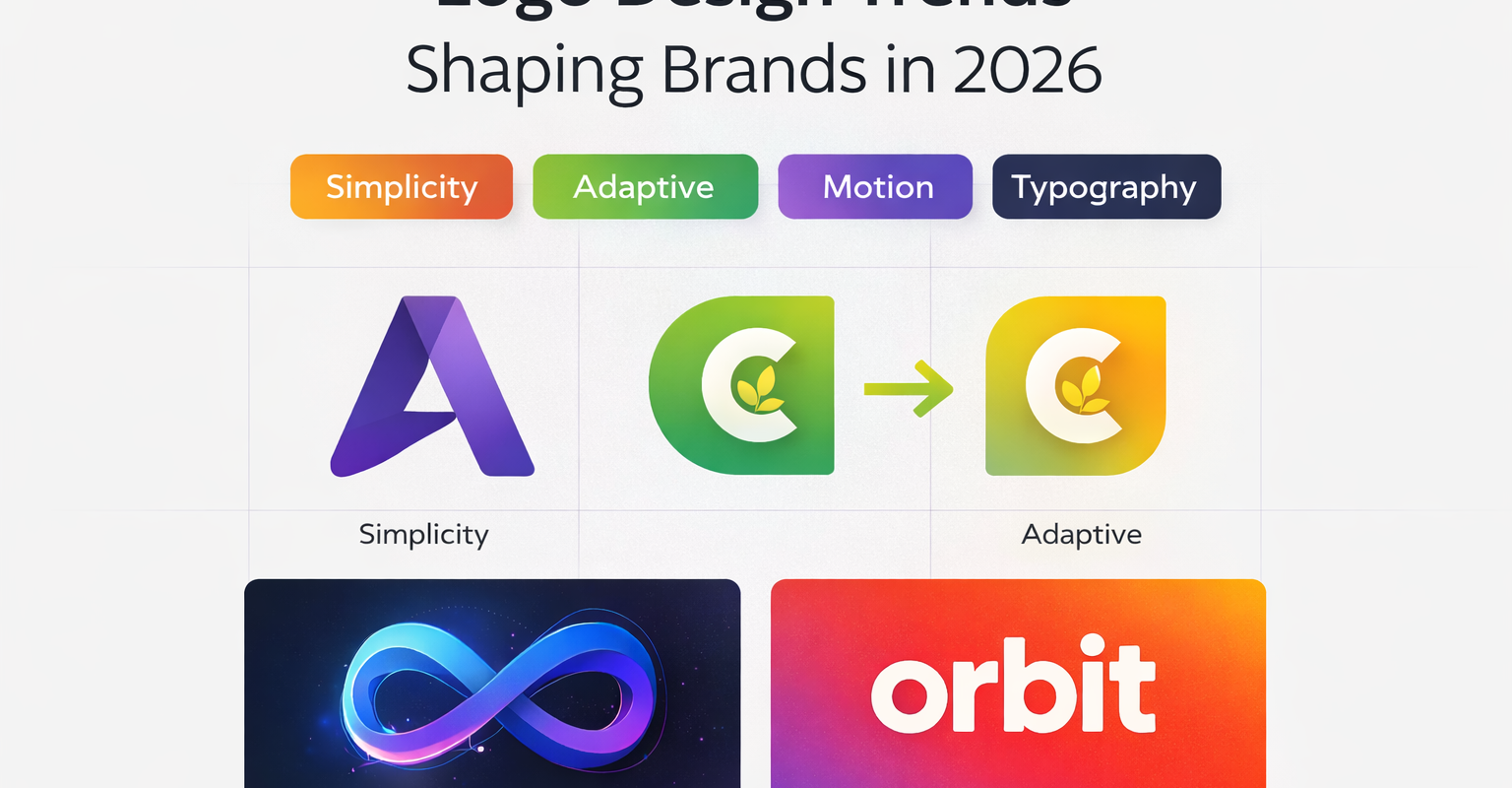

A logo has never been just a symbol. It is the first signal of how a brand thinks, moves, and presents itself to the world. In 2026, logo design continues to evolve alongside the digital environments where brands now live.
As brands compete for attention across screens, platforms, and formats, logos are becoming more flexible, expressive, and strategically built for digital-first audiences.
Simplicity That Scales
Minimalism remains one of the strongest directions in logo design. But in 2026, simplicity is less about aesthetics and more about functionality.
Logos now need to work everywhere: social media icons, mobile apps, websites, packaging, and even motion graphics. Clean shapes, balanced typography, and reduced visual clutter allow logos to scale easily across platforms without losing recognition.
The goal is clarity. The strongest logos today communicate instantly.
Adaptive and Flexible Logos
Another growing trend is the rise of adaptive logos. Instead of one static mark, brands are designing identity systems that can shift depending on the environment.
A logo might appear in its full form on a website, a simplified icon on an app, or an animated version in digital campaigns. The identity remains recognizable, but it adapts to the context where it appears.
This approach allows brands to remain consistent while still feeling dynamic.
Motion as Part of Identity
As brands increasingly live on screens, motion is becoming part of logo design itself.
Animated logos are appearing in website intros, social media content, and digital advertising. Subtle movement—whether through transitions, reveals, or looping animations—helps logos feel more alive in digital spaces.
Motion is no longer decoration. It is becoming part of the identity system.
Bold Typography
Typography-led logos are also gaining traction. Instead of relying on complex symbols, many brands are turning their names into the core visual asset.
Custom typefaces, distinctive letterforms, and confident spacing allow brands to stand out while keeping their identities simple and memorable.
Typography has become both the logo and the voice of the brand.
Logos Built for the Digital Era
The common thread across all these trends is one thing: logos are being designed for digital environments first.
They need to perform on mobile screens, adapt across platforms, and remain recognizable even at the smallest sizes. In many ways, the modern logo is less about decoration and more about creating a system that supports how brands communicate online.
As branding continues to evolve, the most effective logos will not just look good—they will function seamlessly across the digital landscape where modern brands now live.